
You can get a private bedroom in sober living, but it depends on the home you choose and which beds are open when you arrive. That room isn’t always guaranteed. Many homes use shared rooms to keep costs down, often $450 to $800 a month versus $1,000 to $2,500 for private rooms. Even with your own room, you’ll likely share bathrooms, the kitchen, and chores. Below, you’ll find what to ask so your room fits your needs and budget.
Key Takeaways
- Private bedroom availability depends on the sober living home, with some offering private rooms, others shared rooms, and many offering both.
- Shared rooms are common because they serve more residents and keep monthly costs lower, typically around $450 to $800 per month.
- Private rooms almost always cost more, with published national estimates ranging from about $1,000 to $2,500 per month.
- Even with a private bedroom, residents usually share bathrooms, kitchens, living areas, and laundry facilities, and they follow assigned chores.
- Confirm in writing whether a private room is available now and guaranteed for your full stay, since beds change as residents move.
Do you get your own room in sober living
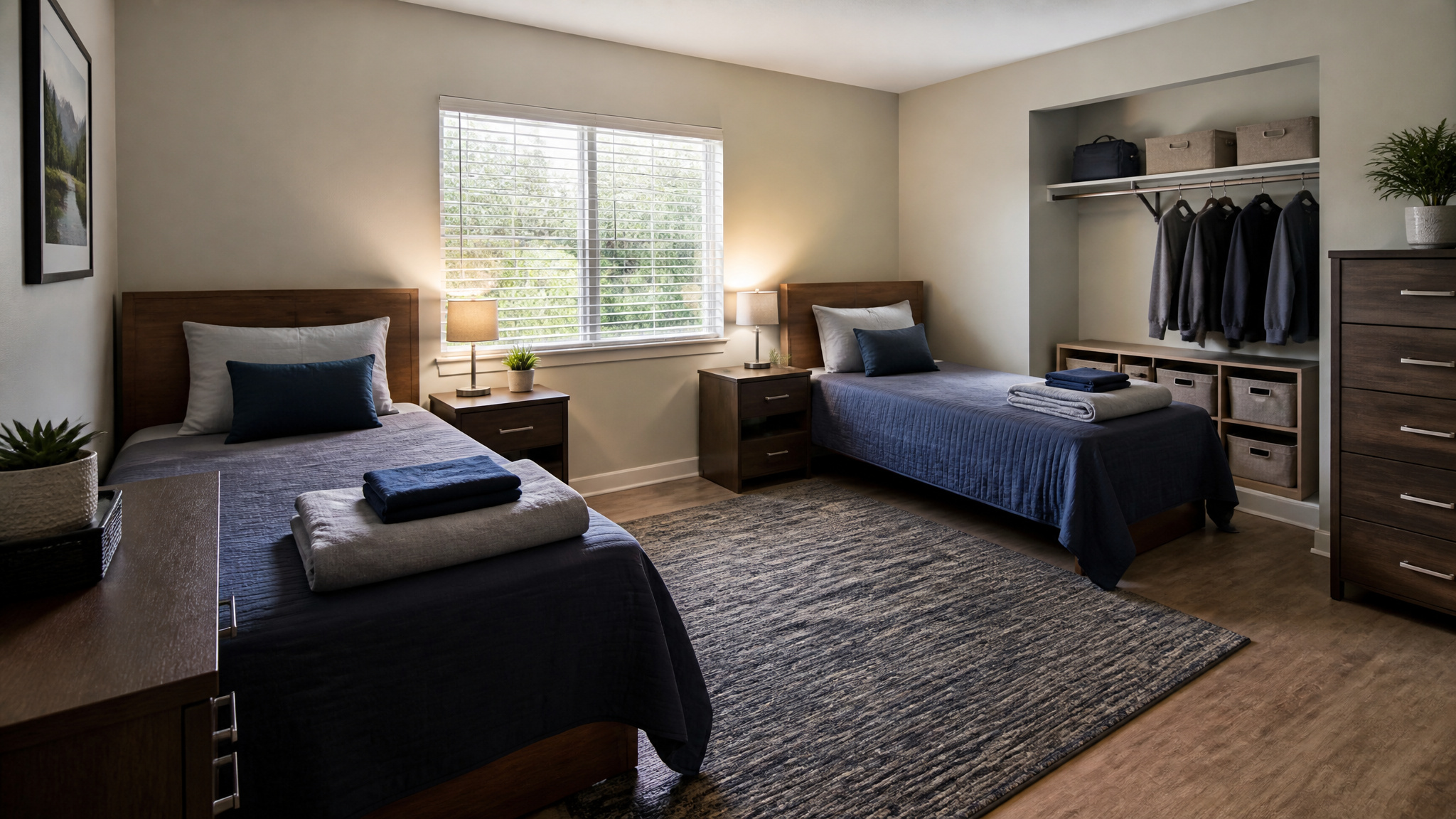
You might get your own room, but it depends on the home you choose. Some sober living homes offer private bedrooms, others assign shared rooms, and many offer both. Your placement usually comes down to the home’s capacity, its policies, and which beds are open when you arrive. Since availability shifts as residents move in and out, a private room you see today may be gone next week.
Shared rooms are common, especially in lower-cost homes, and they can reduce your monthly expenses. If you want privacy, ask directly whether a private bedroom is available now and whether that assignment is guaranteed for your full stay. Then get the room type and price in writing before you accept placement. That small step protects you from surprises later.
Why shared rooms are the norm and what that is for
Shared rooms are the norm in sober living because they let a house serve more residents while keeping your monthly costs down, which is why they are common in lower-cost and higher-capacity homes. If you can’t get a private room, a shared bedroom is often the default. Published estimates put shared rooms around $450 to $800 per month, compared with roughly $1,000 to $2,500 for private rooms, though prices vary by location and services. How many people share a room depends on applicable state and local rules and the home’s own capacity. Ask how many residents occupy each shared bedroom, whether beds are single or bunk, and whether the home assigns roommates before you move in. You should also confirm whether you can request a room change later if the arrangement isn’t working for you.
How room types and prices compare
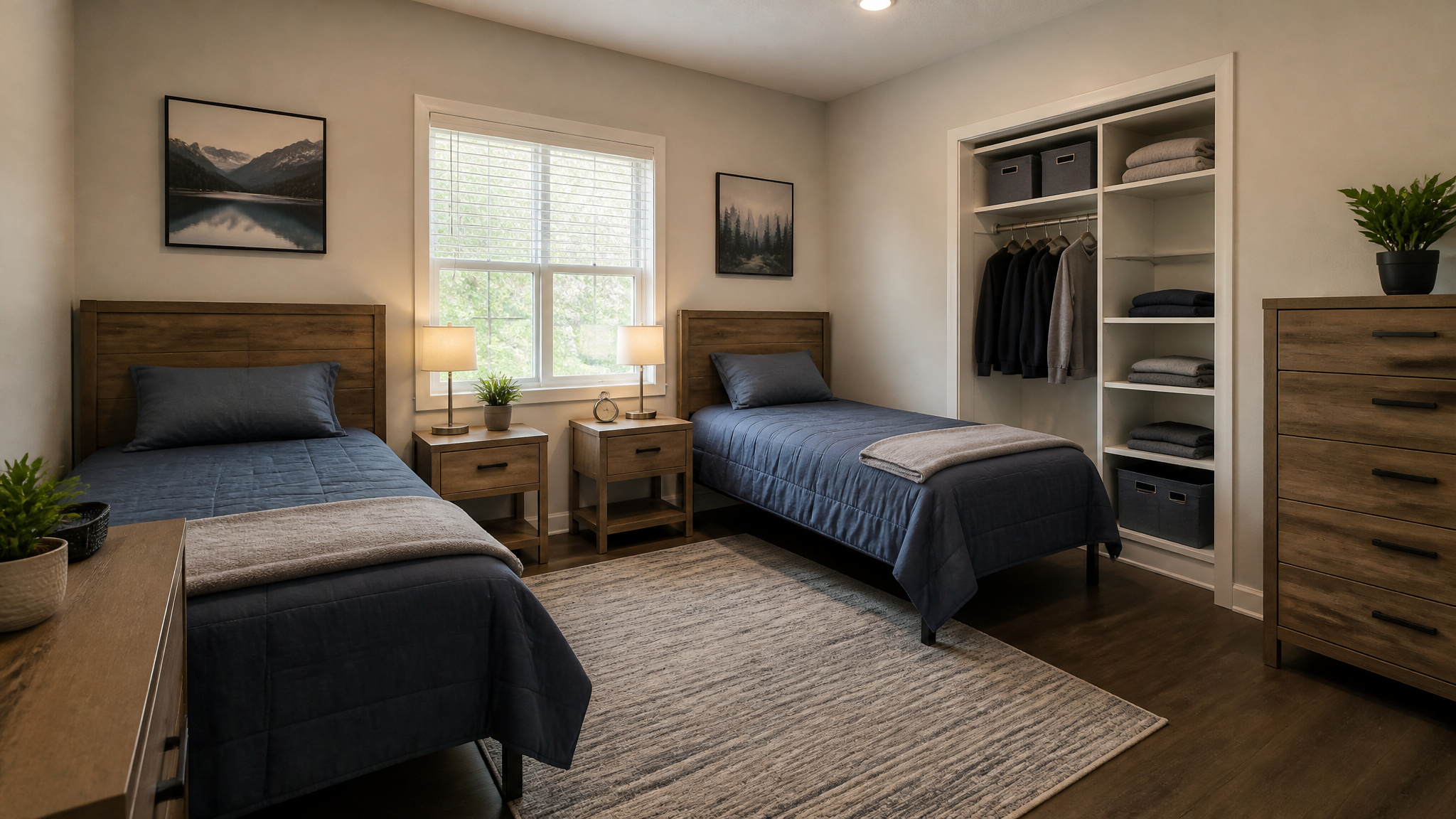
Private rooms almost always cost more than shared rooms, though the price gap varies widely. Published national estimates show a broad spread, and one Orange County provider’s rates show how narrow the gap can get locally.
| Room Type | Monthly Cost Estimate |
|---|---|
| Shared room (national range) | $450 to $800 |
| Private room (national range) | $1,000 to $2,500 |
| Shared room (Orange County example) | $800 to $950 |
| Private room (Orange County example) | $1,000 to $1,300 |
Location, staffing, amenities, and structure all shape what you’ll pay. Some homes bundle utilities, Wi-Fi, furnishings, or house support into the fee, so a higher price may cover more. Since a lower monthly rate can make recovery housing more sustainable, ask exactly what’s included. Treat online ranges as estimates and request the home’s current written fee schedule before you commit.
What is shared beyond the bedroom, from bathrooms to kitchen
Bathrooms, the kitchen, living areas, and laundry facilities are often shared, though arrangements vary by home. Even with a private bedroom, you’ll likely share much of the rest of the house. Ask how many residents share each bathroom and whether there’s a schedule for morning showers before you commit. In the kitchen, find out whether you’ll get your own fridge and pantry space, who buys staples, and how cooking and cleanup work. Many homes assign chores, so ask how they rotate and what happens if someone skips theirs. Clarify whether utilities, Wi-Fi, and furnishings are included in your fee. Shared spaces can feel crowded initially, but they also build accountability and connection. Clear expectations upfront help you settle in with fewer surprises.
How roommates are matched and whether you can request a change
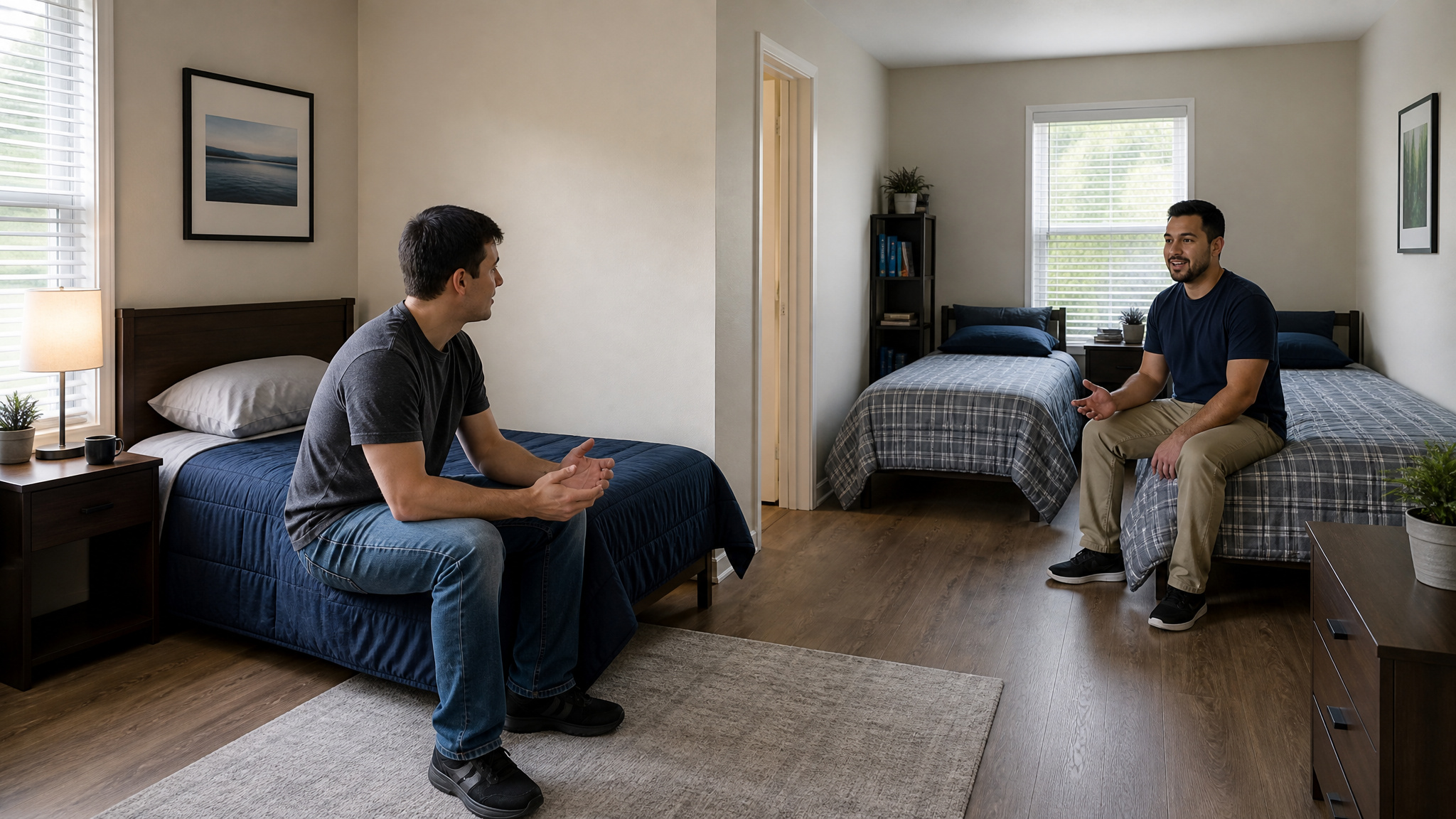
Roommate matching and change requests vary from home to home, because policies aren’t standardized, so ask directly before you move in. Find out whether staff assign roommates or whether you’ll have any input, and how many people will share your room. Ask about the sleeping setup, too, since some homes use single beds and others use bunks. If a room isn’t working, you’ll want to know whether you can request a change and how that process works. Availability shifts as residents move in and out, so a switch may depend on open beds. Sharing a bedroom with someone you’ve never met can feel like one more unknown on top of many, so get these answers in writing before accepting a placement.
Whether a private room is worth the extra cost
A private room is worth the extra cost only if the benefits to your recovery justify a monthly price that is often much higher. Published estimates put shared rooms around $450 to $800 and private rooms around $1,000 to $2,500, though prices vary by location and services. That gap can strain a budget already stretched by treatment, transportation, or lost income.
A private room may be worth it if you sleep poorly around others, need quiet space to process early recovery, or feel safer with your own door. Remember that privacy doesn’t exempt you from room checks or house rules.
Ask for the home’s current written fee schedule and confirm what’s included, such as utilities, Wi-Fi, or furnishings. Then choose the option you can sustain for your full stay.
What to ask about living arrangements before you commit
Ask whether your room assignment is guaranteed, what each room type costs, and how roommates and room changes are handled, and get the answers in writing before you accept a placement. Availability changes as beds fill and residents move out, so a verbal promise isn’t enough.
Start with these:
- Is a private bedroom available now, and is the assignment guaranteed for my full stay?
- What’s the monthly price difference between private and shared rooms, and what does each fee include?
- How many residents share each bedroom, and are beds single or bunk?
- Who assigns roommates, and can I request a room change?
- What happens to my room if occupancy changes?
- What storage, locks, and room-check policies apply?
Request the home’s current written fee schedule. Clear answers now help you focus on recovery later.
Conclusion
Whether you get a private bedroom in sober living depends on the home, since arrangements range from shared rooms that keep costs lower and build accountability to private rooms that offer more quiet and independence. Neither is better for everyone, and the right choice depends on your budget, your recovery needs, and how you live best. Asking about living arrangements before you commit helps you find a home where you feel safe and comfortable. The right space makes early recovery easier to sustain.
Find Sober Living That Fits the Way You Live
Comfort and the right environment matter in early recovery, from room arrangements to house structure. At Sobriety and Beyond, our structures sober living housing offere supportive environment that matches your needs, budget, and recovery goals. Contact us today to find a home where you can settle in and focus on getting well.
Frequently Asked Questions
Are There Minimum Bedroom Size Requirements for Sober Living Homes?
Sometimes, but it depends on where you’re living. There’s no single nationwide standard, so state and local rules set the requirements. In Arizona, for example, you’re entitled to at least 60 square feet in a single room and 50 square feet per resident in a shared room, plus an adult-sized bed, clean bedding, an emergency exit, and individual storage space. Before moving in, ask your home which regulations govern its bedrooms.
Can I Lock My Bedroom Door or Store Valuables Securely?
It depends on the home, but you’ll likely have some secure storage. Arizona, for example, requires a secure spot for medications, valuables, and personal belongings that only you and the manager can access. Bedroom door locks aren’t guaranteed, though, and room checks may still happen. Before moving in, ask whether the home provides a lock, dresser, or closet, and how bedroom access works so you feel truly settled and safe.
Are Staff Allowed to Inspect or Search My Bedroom?
Possibly. It depends on your home’s rules. Some homes include room checks, and having a private bedroom doesn’t exempt you from them. Policies vary, so ask before moving in how often checks happen, who conducts them, and whether you’ll be present. In Arizona, homes must provide secure storage for medications and valuables only you and the manager can access. Get the search policy in writing to know what to expect.
Can Visitors or Nonresidents Enter or Stay in My Bedroom?
It depends on your home’s rules, but don’t assume visitors can stay overnight. In Arizona, for example, you can’t share your bedroom with a nonresident. Even with a private room, you’re still following house rules, so visitor access may be limited. Before moving in, ask about visitor policies, bedroom access, and room checks. Get the answers in writing so you’ll know exactly what’s allowed and can protect your recovery space.
Can I Bring My Own Furniture, Bedding, or Decorations?
It depends on the home’s policies, so you’ll want to ask before moving in. Some homes bundle furnishings into monthly fees. In Arizona, homes must provide an adult-sized bed, clean bedding, and individual storage space, so you may not need much. If you’re sharing a room, space can be limited. Ask what’s provided, what you can bring, and whether decorations are allowed. Getting written answers can save you stress.